
What Jews do on the holiest day of the year — and why Christians who love Scripture and Israel should understand it
Sep 19, 2026
Christian friends often ask me to share about Yom Kippur, the Day of Atonement. Even though it’s Biblical, unlike the three pilgrimage festivals or Rosh Hashana observed ten days before, it’s one that fewer Christians connect to or understand. Nevertheless, it’s no less significant. And surprisingly, if you grew up in or attend a church, you may already know more about Yom Kippur than you realize.
The Day of Atonement is commanded in Leviticus 16 and Leviticus 23. God told Israel to set aside the tenth day of the seventh month as a Sabbath of Sabbaths, a day to afflict the soul, a day on which atonement would be made for the people. The seventh month is Tishrei, and the tenth day this year begins tonight.
Christians often read that chapter and then turn to Hebrews, where the high priest enters the Holy of Holies once a year with blood. I do not write this to flatten living Judaism into a sermon illustration. I write it because the God of Israel is the God Christians worship, and because millions of Jews observe this day — religiously — with their whole bodies. If you love Scripture and you love Israel, it helps to understand what the day looks like, what we do, what we don’t do, and why.
The Ten Days and the Seal
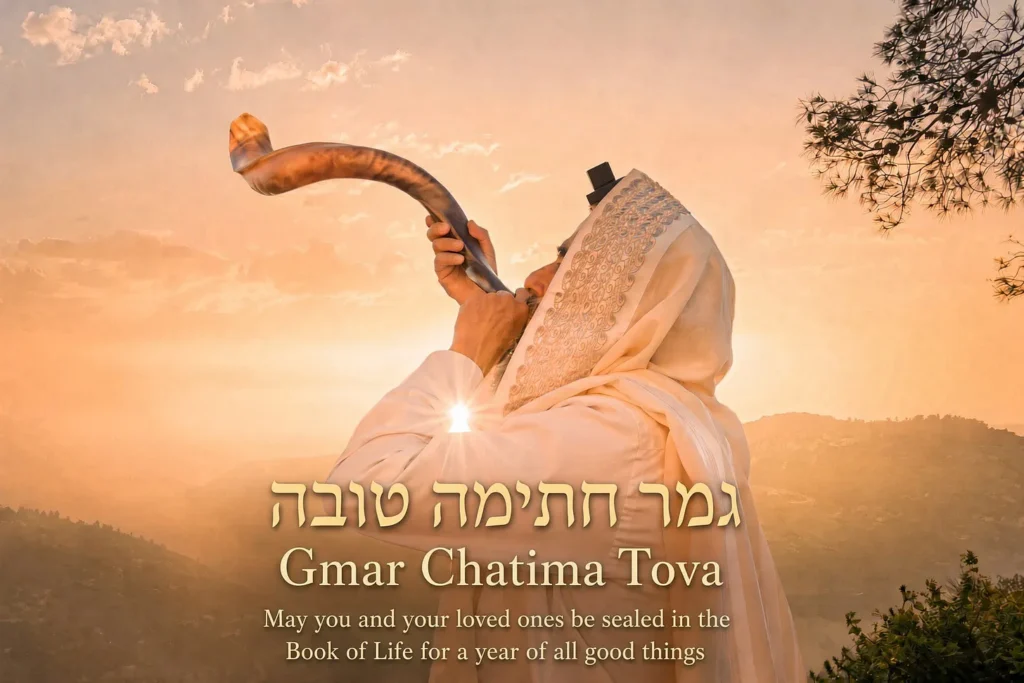
Yom Kippur is the climax of the Ten Days of Repentance that begin on Rosh Hashanah. Tradition teaches that on Rosh Hashanah God inscribes us in the Book of Life, and on Yom Kippur He seals that judgment. That is why the greeting changes. Before Yom Kippur people say Shanah Tova — Happy New Year. As Yom Kippur arrives we say Gmar Chatima Tova: may you be sealed for a good final inscription. We do not say Happy Yom Kippur. The day is holy and heavy, not festive.
The Five Withdrawals
The Torah’s phrase is “you shall afflict your souls.” Our sages named five withdrawals from ordinary comfort. We do not eat or drink for about twenty-five hours, from before sunset until nightfall the next day. We do not bathe for pleasure. We do not anoint our bodies with oils, creams, or perfume. We do not wear leather shoes. We do not have marital relations.
This is not self-punishment for its own sake. Judaism is not an ascetic faith. We sanctify our holy days over wine and bread every Shabbat and feast on almost every other holy day.
On Yom Kippur we step away from the body’s usual claims so the soul can stand uncluttered before God. Jewish tradition says that on this day Israel resembles the angels, who neither eat nor drink.
Leather shoes were the comfortable, status-bearing footwear of the ancient world. Removing them shows humility, and it is also a way of standing on holy ground, as Moses did at the burning bush and as the priests did in the Temple. Children, the ill, the elderly, and women after childbirth are exempt. A sick person who must eat, eats. God wants the living, not a collapsed congregation.
What We Wear
What we wear matters as much as what we refuse. Many men wear a white robe called a kittel. It resembles a burial shroud, and that is part of the point. We remember that we are mortal. White also represents purity. Gold jewelry is often set aside because gold recalls the sin of the golden calf. The prayer shawl, the tallit, is worn even at night, which is unusual. The beginning service, Kol Nidre, begins before sunset so the tallit can be put on while it is still day.
The Five Services
The liturgy is long because the day is long. There are five services.
Kol Nidre opens the holy day. The ark is opened. Torah scrolls are taken out and held. The person leading the prayers sings a legal formula three times, releasing vows made to God that we failed to keep, and beseeching God not to judge the congregation harshly. It is not a loophole for promises made to other people. Those still bind. Kol Nidre is a cry of honesty. We are small. Our words run ahead of our strength. The melody is one of the most recognizable sounds in Jewish life.
Morning and additional services include the confession. This is not like confession in Catholicism, confessing to a priest in private, but directly to God, in public, as part of a congregation. We beat our chest lightly as we recite lists of sins we may possibly have committed. We confess in the plural. We have sinned. We have spoken slander. Not every person committed every offense. We stand as a people.
This is unique from most Christian worship, which is typically in the singular. It’s one of the most remarkable and timeless things about being Jewish: no matter where we are, what we believe, how we practice, we are all intricately united. I am responsible for the community that formed me, and the community is responsible for me.
At the heart of the additional service is the Avodah, a recitation of what the high priest did in the Temple: five immersions, the change from gold garments to simple white linen, the two goats, the lots, the goat sent to Azazel, and the moment he entered the Holy of Holies with incense and blood. After the Temple was destroyed, Jews did not invent a replacement sacrifice. We tell the story, we bow, and we ask God to accept the service of our lips and our repentance.
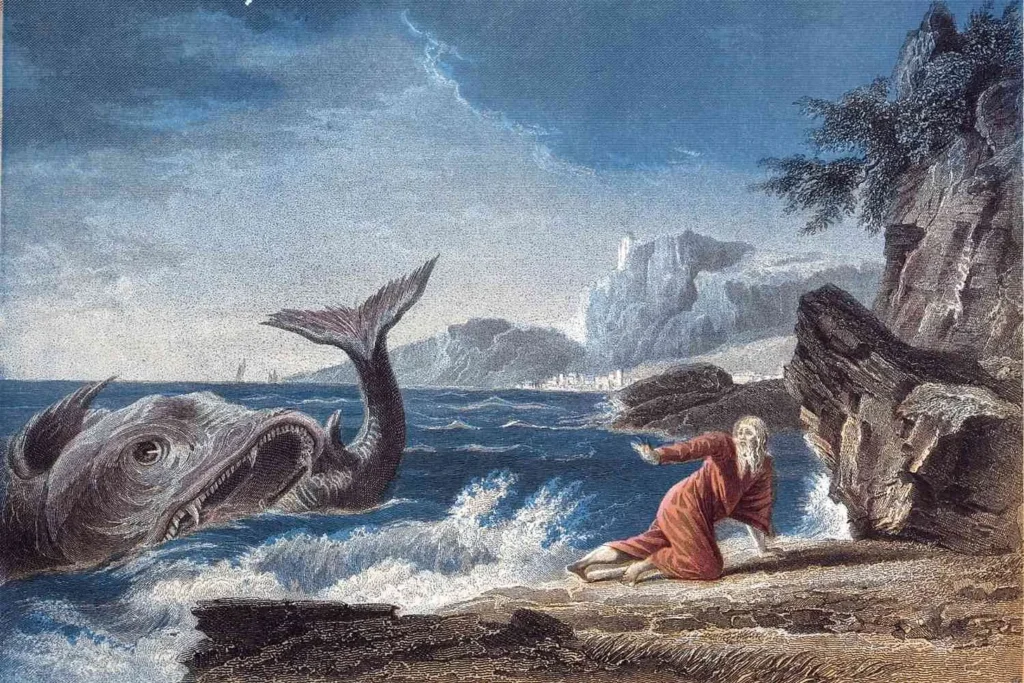
In the afternoon we read the Book of Jonah. Christians know Jonah as the reluctant prophet. Jews read him on Yom Kippur because Nineveh repented.
The symbolism is clear: even a pagan city, when it turned, was heard and forgiven. God wants us to return to Him more than He wants our arguments about who deserves it.
Ne’ilah, the last service, comes in the final hours. We see in it the locking of the gates. Our prayers grow shorter and more urgent. We stand throughout, the ark remains open. At the end we cry out the Shema Yisrael — Hear O Israel, the Lord our God, the Lord is One — then Adonai hu HaElohim — the Lord is God — seven times, and then a single long blast of the shofar. That blast is not the many notes of Rosh Hashanah. It is one held note that says: the day is over. Go live.
Yom Kippur in Israel
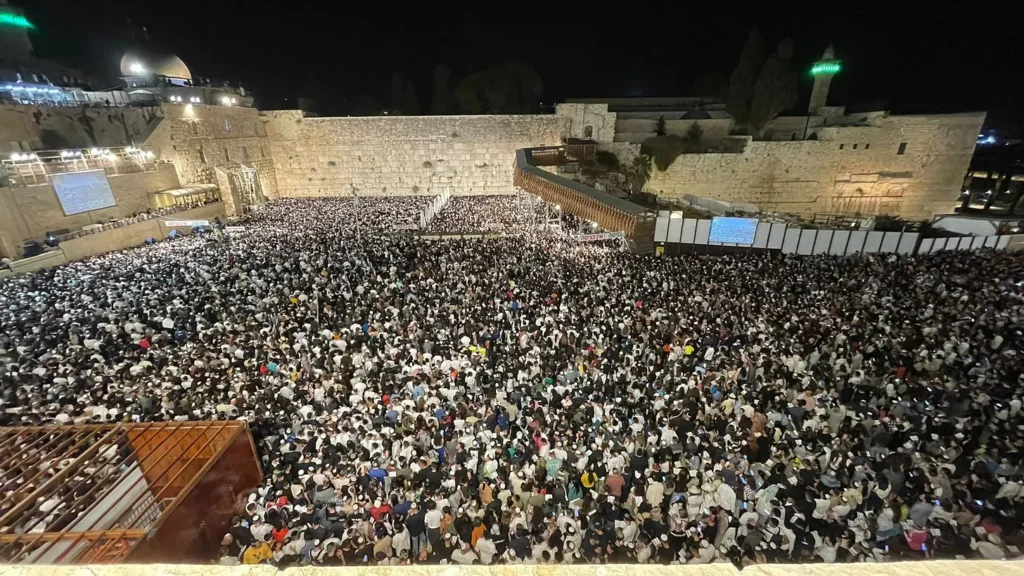
In Israel the day is observed in public in a way it cannot be anywhere else. The night before Yom Kippur, hundreds of thousands gather for the final Slichot prayer at the Western Wall, broadcast live on television with studios and panel discussions at the center of Jerusalem, as if it were coverage of a major sporting event. But Yom Kippur is more significant than them all, together.
The country stops. The airport shuts down. Radio and television go dark. There is no public transit. Highways that roar six days a week lie empty. You can stand in a Tel Aviv artery and hear birds. People walk to synagogue dressed in white. For twenty-five hours, the Jewish state lives as if the soul of the people were the only traffic that matters.
In Israel we are also deeply aware that it was on Yom Kippur, because it is our most holy day, that Egypt and Syria launched a surprise attack on us that day in 1973, They turned our most holy day into a day of carnage, a three week war as part of their “holy war” that left some 2600 Israelis killed, many more injured. It’s a day – albeit half a century ago, that still has its scars and has shaped much of Israeli life since. For adult children of soldiers killed that day, people my age, it’s also a day of mourning and remembering the fathers they don’t remember, uncles, brothers, and grandfathers for who they are named.
When three stars appear, the fast ends. Families gather for a simple meal. Sukkot, the festival of booths, is only a few days away. We move from affliction to shelter, from standing before the Judge to sitting in a hut under the sky.

A Word to Christian Friends
Do not treat Yom Kippur as a museum of Leviticus. Jews are not reenacting a dead ritual. We are doing what our parents did, what their parents did, going back not just generations but millennia. We worship in the language of our Scripture, according to the Biblical calendar God gave Israel.
If your faith is rooted in that same Scripture, all this is relevant to you too. Not because you have to observe Yom Kippur as we do, but because by doing it, we preserve the very essence of our shared text that keeps the root strong so the branches, too, can thrive.
Repentance here is not a mood. It is a day with a deliberate structure: no food, no leather, white clothes, confession in the plural, the story of the Temple, Jonah’s stubborn mercy, a locked gate, and one long note on a ram’s horn.
Gmar Chatima Tova. May you and your loved ones be sealed for a year of life and all things good.

Subscribe to Jonathan’s Substack
By Jonathan Feldstein · Launched 4 months ago
Join me for updates and insights about Judaism & Christianity from Israel and the intersection of these, and more.Subscribe
By subscribing, you agree Substack’s Terms of Use, and acknowledge its Information Collection Notice and Privacy Policy.